
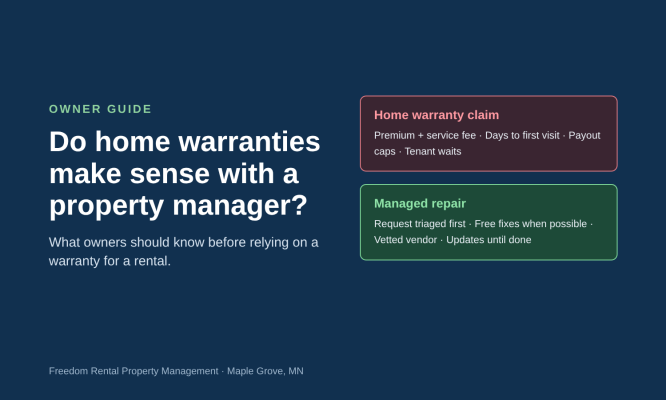
Every few months an owner asks us some version of the same question. “I already pay for an American Home Shield plan, can you just call them when something breaks?” Or, “My house is new, shouldn’t the builder warranty cover this?” Or, “My brother-in-law owns an HVAC company, can you use him?”
They’re fair questions, and I understand why owners ask. I’m a rental owner too, and I’ve had a home warranty on one of my own rentals. On paper, a warranty looks like it should save money. In practice, once a tenant lives in the home and a property manager is handling repairs, most owners end up paying more, waiting longer, and taking on risk they didn’t expect.
Our goal with every repair is simple: get it done correctly, get it done quickly, and pay a reasonable price for it. This article walks through how home warranties, builder warranties, and utility repair plans like CenterPoint Energy’s Home Service Plus measure up against that goal on a managed rental, and how your own preferred vendors can fit in. If you’re wondering about doing your own repairs on an occupied home, I covered that separately in Rental Owners Doing Their Own Maintenance.
The short answer
On a managed rental, a home warranty usually costs you more than it saves. Warranty companies send their own contractors on their own schedule, cap what they’ll pay, and exclude a lot, while Minnesota law still holds you responsible for prompt repairs on things like heat, hot water, and refrigerators. Builder warranties cover less than most owners expect and move slowly once a tenant lives in the home. What works best is one process: every request is triaged by your manager first, then sent to a licensed, insured vendor who reports back through the manager’s software. Your own preferred vendor can be part of that, as long as they’re a good fit for the process.
Why process matters so much in property management
When you own one or two rentals, you can keep track of every repair in your head. When you manage hundreds of homes, you can’t. Speed, communication, and follow-through only happen consistently when everyone involved works the same way, every time.
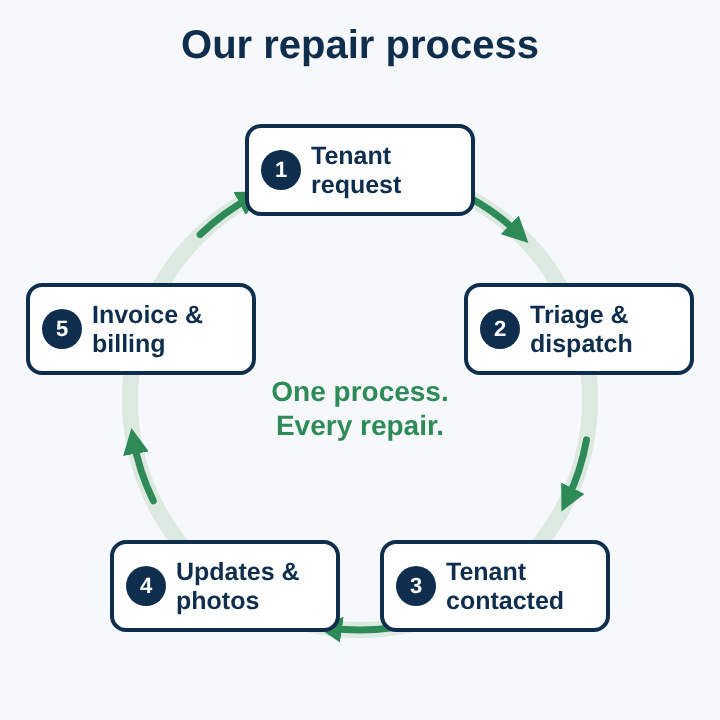
Here’s what a normal repair looks like at Freedom:
- The tenant submits a maintenance request through our online portal.
- Our maintenance team triages it and assigns it to a vendor in our network.
- The vendor receives the work order in the same software, contacts the tenant, and schedules access.
- If there’s a delay, a part on order, or a bigger problem, the vendor updates our maintenance manager in the work order.
- When the job is done, the vendor uploads photos and an invoice, and it’s paid and posted to your owner statement.
Even a simple repair takes at least 45 minutes of staff time when you add up the conversation with the tenant, coordinating the vendor before and after, confirming the fix, updating the owner, and handling the accounting. Our process keeps that time as low as possible. It works because every vendor involved is working the same way, and that’s what gets your repair finished fast.
Good vendors are hard to find
Finding vendors who are punctual, communicate well, and do great work for a reasonable price is one of the hardest parts of this business. Most handymen and contractors we’ve tried don’t meet all of those standards. (We wrote about what we look for in Tips for Hiring a Good Handyman.)
We put a lot of work into finding vendors who do, and we’re proud to say we have a group of them who work with us regularly. They’ve learned our software and follow our process, and because we send them steady work, they’re responsive when your home needs something. That’s a big part of what you’re paying a property manager for: a bench of vendors who already know how to get repairs done well.
Can you use my preferred vendor?
We’ll do our best to make it work. Plenty of owners have an HVAC company, a pest control company, or another trade they’ve trusted for years, and that relationship has value. Before we send them work, we’ll talk with them to make sure they’re a good fit, and they’ll complete the same vendor onboarding every vendor of ours goes through:
- Proof that they’re properly licensed for the trade, where Minnesota requires it.
- Proof of liability insurance.
- They work with our property management software. That means they receive work orders by text and email, contact the tenant to schedule, and update us in the work order.
- They complete the work in a timely manner and let us know when it’s done, with photos and an invoice.
Those requirements exist to protect you. When a vendor doesn’t show up or doesn’t report back, the tenant calls us asking why nobody has come, we chase the vendor for a date, the tenant gets frustrated, and the repair drags on. That costs goodwill with a good tenant and can create legal risk for you (more on that below). If a vendor turns out not to be a good fit, we’ll let you know and send one of our proven vendors instead, so your repair still gets done.
Annual HVAC servicing
Annual furnace and AC tune-ups are one of the most common preferred-vendor requests, and if your HVAC company completes onboarding and reports back on each visit, we’re happy to use them. It’s worth comparing what you get, though. We’ve set up a custom program with our HVAC vendor to keep annual servicing as affordable as possible, and because they work closely with us, their visit covers more than a basic tune-up. While they’re at the house, they check and change the furnace humidifier filter, test the sump pump, and take care of other needs specific to that home. If you use your own company, ask them to include those items, because a dead sump pump or a clogged humidifier filter is exactly the kind of small thing that turns into an expensive problem later.
Licensing and permits matter on a rental
There’s also a legal side. Plumbing and electrical work in Minnesota often requires a permit, and on a home that isn’t owner-occupied, the permit generally must be pulled by a licensed contractor. City guidance is blunt about it: it’s illegal for anyone who isn’t licensed, whether that’s the owner, a handyman, or any other vendor, to do electrical work on a property that is rented or occupied by others (City of Inver Grove Heights). A low-cost handyman may be talented, but if he isn’t licensed for the trade, the liability for that work lands on you. That’s why proof of licensing is part of onboarding for every vendor on your home.
Why home warranties rarely pay off on a rental
Home warranties from companies like American Home Shield, Choice, and First American, along with utility repair plans like CenterPoint Energy’s Home Service Plus, are marketed as a way to protect you from big repair bills. For an owner who lives in the home and can wait a week or two for a repair, they sometimes make sense. For a rental with a tenant living in it, the math and the timing usually work against you.
They’re slow
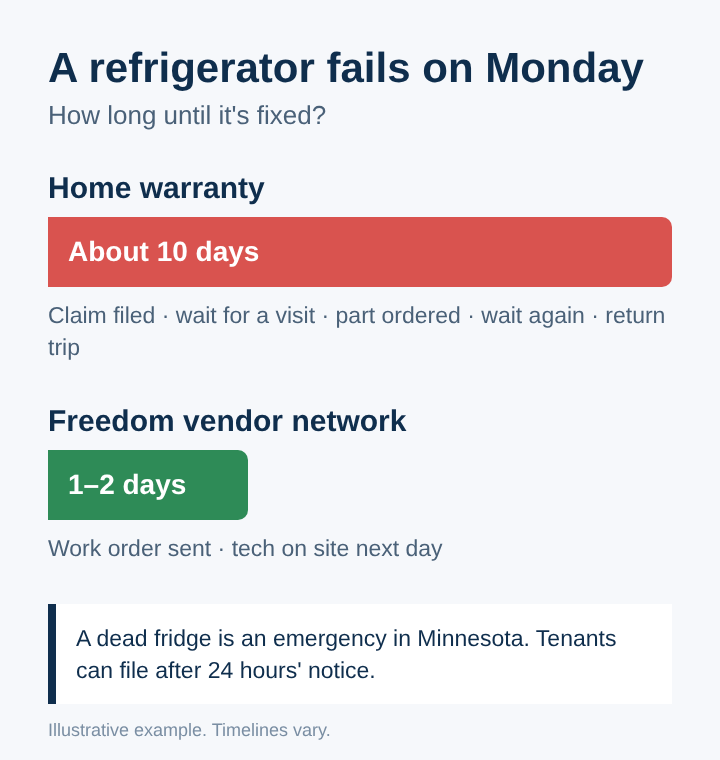
Warranty companies dispatch from their own list of contractors, on their own schedule. It’s common to wait days for a first visit, then wait again for a part to be ordered, and then wait for a second visit to install it. Other property managers report the same thing: one manager saw an AC and furnace replacement take over a week and a refrigerator replacement take two weeks through warranty companies (Qwest Property Management). Another investor canceled warranty contracts on all 15 of his rentals after vendors took up to 48 hours just to respond, called him instead of the tenant to arrange access, and charged a new service fee on each return visit (Inman).
Part of the reason is who does the work. Warranty companies pay contractors discounted rates, so many of the best local vendors don’t take warranty jobs at all, and the ones who do often fit them in around better-paying work (Cissell Management).
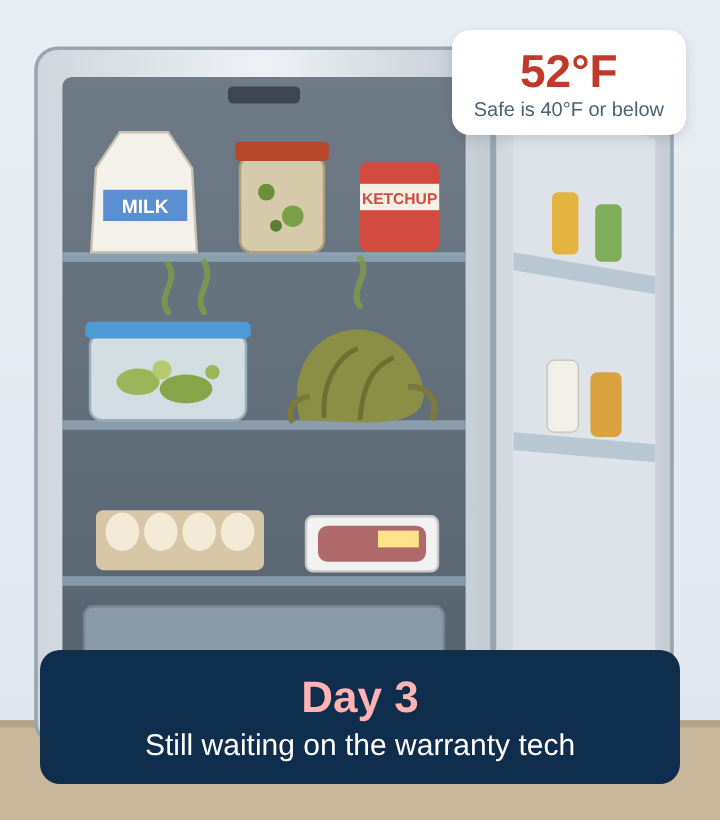
I learned this firsthand. A refrigerator failed in one of my rentals, the tenant’s food was spoiling, and I had a home warranty on the property. I called it in, and the dispatcher told me the earliest visit was a week out. After that, they would diagnose it, order a part, wait for it to arrive, and come back. The tenant was understandably upset, so I hung up and called the same appliance repair company directly, planning to pay out of pocket. I got the same dispatcher. Without the warranty in the picture, she could have a technician there the next day.
In Minnesota, slow repairs create legal risk
This is where a slow warranty claim goes from inconvenient to risky for a rental owner. Under Minnesota’s Emergency Tenant Remedies Action law (Minn. Stat. 504B.381), a tenant can go to court over the loss of heat, the loss of hot water, a nonfunctioning refrigerator, or a nonfunctioning air conditioner if AC is included in the lease. The tenant only has to try to notify the landlord at least 24 hours before filing, and hearings are usually held within 3 to 7 business days (LawHelpMN).
If the court finds the landlord didn’t act, it can order immediate repairs, reduce rent until the work is done, order the owner to pay for a hotel, and award the tenant’s attorney fees. Landlords who willfully miss a court-ordered repair deadline face fines of $250, $500, and $750 for repeat failures, and a third failure within three years is a gross misdemeanor (Minn. Stat. 504B.391). “The warranty company hasn’t scheduled us yet” isn’t a defense. The responsibility stays with the owner and the manager, not the warranty company.
The coverage is thinner than most owners realize
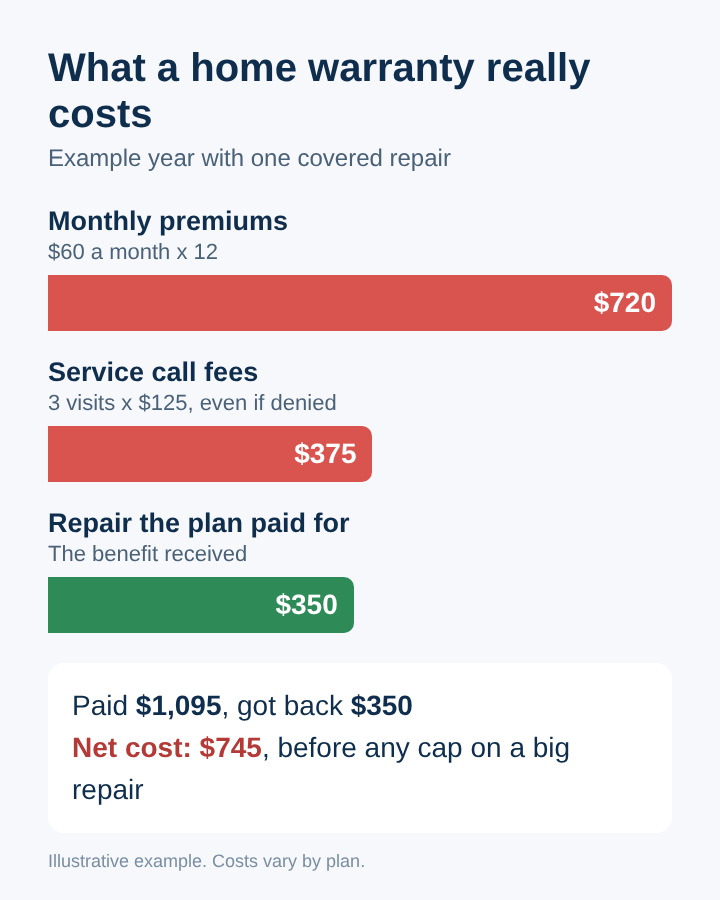
Home warranty companies are businesses. They make money when the premiums and service fees they collect are greater than what they pay out. That isn’t a criticism, it’s simply the model, and it explains a lot about the experience:
- You pay twice. There’s a monthly premium, often $30 to $120 a month, plus a service fee of $100 or more every time a technician comes out, even if the claim is denied (NerdWallet).
- Payouts are capped. Many plans cap what they’ll pay per system or appliance. CenterPoint’s Replacement Assistance Plan, for example, pays a fixed $1,625 toward a new furnace or central air conditioner, and doesn’t cover installation, removal, or taxes (CenterPoint Energy). A cap like that may cover only half of a real replacement.
- Exclusions are long. Pre-existing conditions, “improper maintenance,” code upgrades, and many components are commonly excluded. Some plans also limit eligibility to owner-occupied homes.
- Repair is favored over replacement. Several managers report warranty contractors patching a failing system repeatedly instead of replacing it, with the tenant living through each breakdown (Pensacola Realty Masters). In one example, a warranty approved only a $400 to $600 part for a 16-year-old air conditioner with a failed compressor and a clogged coil, instead of replacing the system, leaving the owner with a unit likely to fail again (Cissell Management).
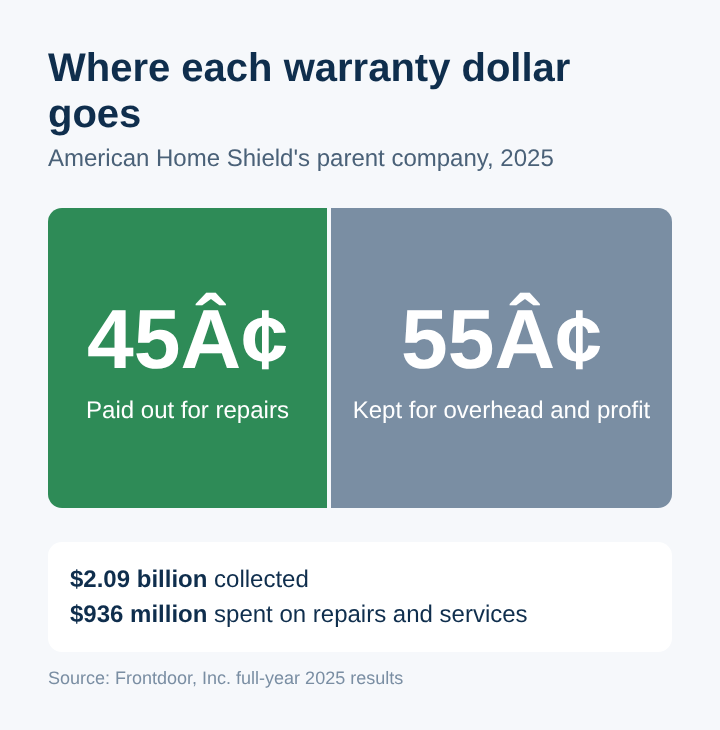
The numbers back this up. Frontdoor, the parent company of American Home Shield, reported $2.09 billion in revenue in 2025 and $936 million in cost of services, which means about 45 cents of each dollar customers paid went back out as repairs (Frontdoor).
Most owners we’ve worked with spend more on premiums and service fees than they get back in covered repairs. For most owners, a better use of that money is to cancel the warranty and put the monthly premium into your maintenance reserve. That way, when something breaks, your manager can send a vendor who shows up quickly and give you an honest recommendation. Often that means replacing an aging appliance instead of paying for technician labor to repair it over and over.
There is one situation where a home warranty can make sense: when you’re selling a home, a warranty can give the buyer some peace of mind during their first year. For a rental with a tenant living in it, there are better ways to spend that money.
Do your tenants call CenterPoint Home Service Plus directly?
A lot of owners who come to us have CenterPoint Energy’s Home Service Plus (HSP). It’s worth knowing what it is and what it isn’t. HSP is an appliance and home-system repair program, not a handyman service. You can buy a monthly or annual repair plan that covers things like the furnace, boiler, air conditioner, water heater, and certain kitchen and laundry appliances, or you can call HSP for a one-time repair and pay for parts and labor. You don’t need a plan, or even to be a CenterPoint gas customer, to use them (CenterPoint Energy). What HSP doesn’t do is general handyman work like patching drywall, fixing doors, or most maintenance outside of HVAC and appliances.
Many owners tell us their tenants call HSP directly whenever something breaks. It feels convenient, but it means every repair need goes straight to a technician, unfiltered. Nobody checks whether a visit is needed before one is booked. Nobody confirms the problem is something HSP covers. And you often don’t hear about it until the bill or the next problem shows up.
Having a manager in the middle changes that. Every request comes to our maintenance team first, and we vet it before a vendor is ever scheduled. A surprising number of “broken” items have a quick, free fix: a tripped breaker or GFCI outlet, dead thermostat batteries, a clogged furnace filter, a jammed garbage disposal that just needs a reset, or a thermostat set to the wrong mode. When we can walk the tenant through a fix like that, the problem is solved the same day and you don’t pay for a service call. When a vendor is needed, we send the right one, with photos and notes, and we track the job until it’s done. That triage step is one of the biggest ways a property manager saves you money, and it only works when tenants send requests through the manager instead of calling a repair company directly.
Is a builder warranty worth using on a rental?
Owners of newer homes often expect the builder to cover repairs. Sometimes the builder does, and it’s worth using while you can. The catch is timing: builder warranties work well on an empty house and much less well on an occupied rental.
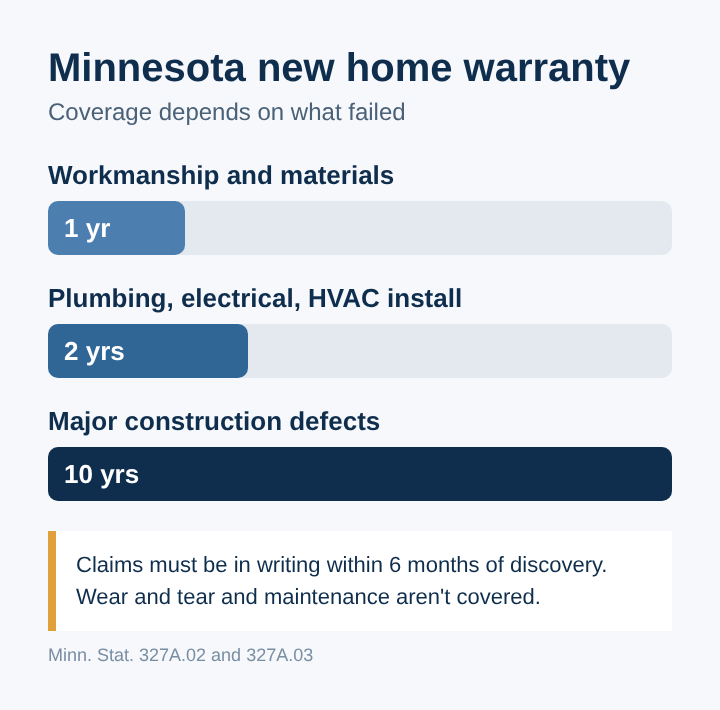
In Minnesota, the statutory new home warranty runs for different lengths of time depending on what failed (Minn. Stat. 327A.02):
- 1 year for defects from faulty workmanship or defective materials.
- 2 years for faulty installation of plumbing, electrical, heating, and cooling systems.
- 10 years for major construction defects.
Each builder may also offer its own warranty on top of that, with different terms and dates. To use any of it, you need to know the home’s warranty start date, which category the problem falls into, and the builder’s claim process, and then wait for the builder to schedule. While a tenant is waiting on a repair, that delay is hard to justify for a covered item that might cost a few hundred dollars to fix right away.
The fine print matters too. The law requires the homeowner to report a defect to the builder in writing within six months of discovering it, and it excludes normal wear and tear, failure to maintain the home, and damage from improper maintenance or alterations by others (Minn. Stat. 327A.03). A lot of what breaks in a rental during its first couple of years, like a clogged drain, a loose hinge, a tripped breaker, or a worn faucet cartridge, is everyday wear and maintenance that a builder warranty was never going to cover.
Builder service departments also tend to move slowly and on their own calendar. They don’t coordinate access with the tenant the way a manager’s vendors do, and they aren’t built to meet Minnesota’s emergency repair timelines. When a tenant has a habitability problem, waiting on the builder puts the risk back on you.
The good news for owners of newer homes: the best time to use your builder warranty is while the home is vacant, before a tenant moves in. Do a thorough walkthrough, submit your claims in writing, and get those items fixed before we place a tenant.
Couldn't a property manager just work with the warranty company?
It’s a fair question, and some managers will. But it doesn’t fix the underlying problems. The warranty company still controls the schedule. The builder still works on its own calendar. The tenant still waits, and Minnesota’s emergency repair laws still apply. On top of that, every warranty claim takes extra staff time to file, follow up, and coordinate, so a manager who handles them has to charge for it somewhere. You’d be paying a warranty premium, a service fee, and extra management time for a slower repair. For most owners, that isn’t a good deal.
What this means for you as an owner
When you hire Freedom Rental Property Management, you’re hiring us to manage maintenance on your behalf, with one goal: get repairs done correctly and quickly, for a reasonable price. We’re rental owners ourselves, and we use the same vendors on your property that we use on our own. Our vendors aren’t the cheapest, and they aren’t the most expensive. They’re reliable, licensed where it matters, and they work inside a process that gets repairs done quickly and documented properly.
That consistency protects your investment, keeps good tenants renewing (poor maintenance is one of the top reasons tenants leave), and keeps you out of court. If you have a home warranty today, consider canceling it and putting the premium toward your maintenance reserve. If you have a builder warranty, use it before your home is rented. If your tenants call CenterPoint’s Home Service Plus directly, let us take over that intake so every request gets vetted first. And if you have a vendor you trust, tell us. We’ll talk with them, walk them through our onboarding, and if they’re a good fit, we’ll be glad to put them to work on your home.
Have questions about how we handle maintenance? Contact us, or see what your home could rent for with a free rental analysis.